

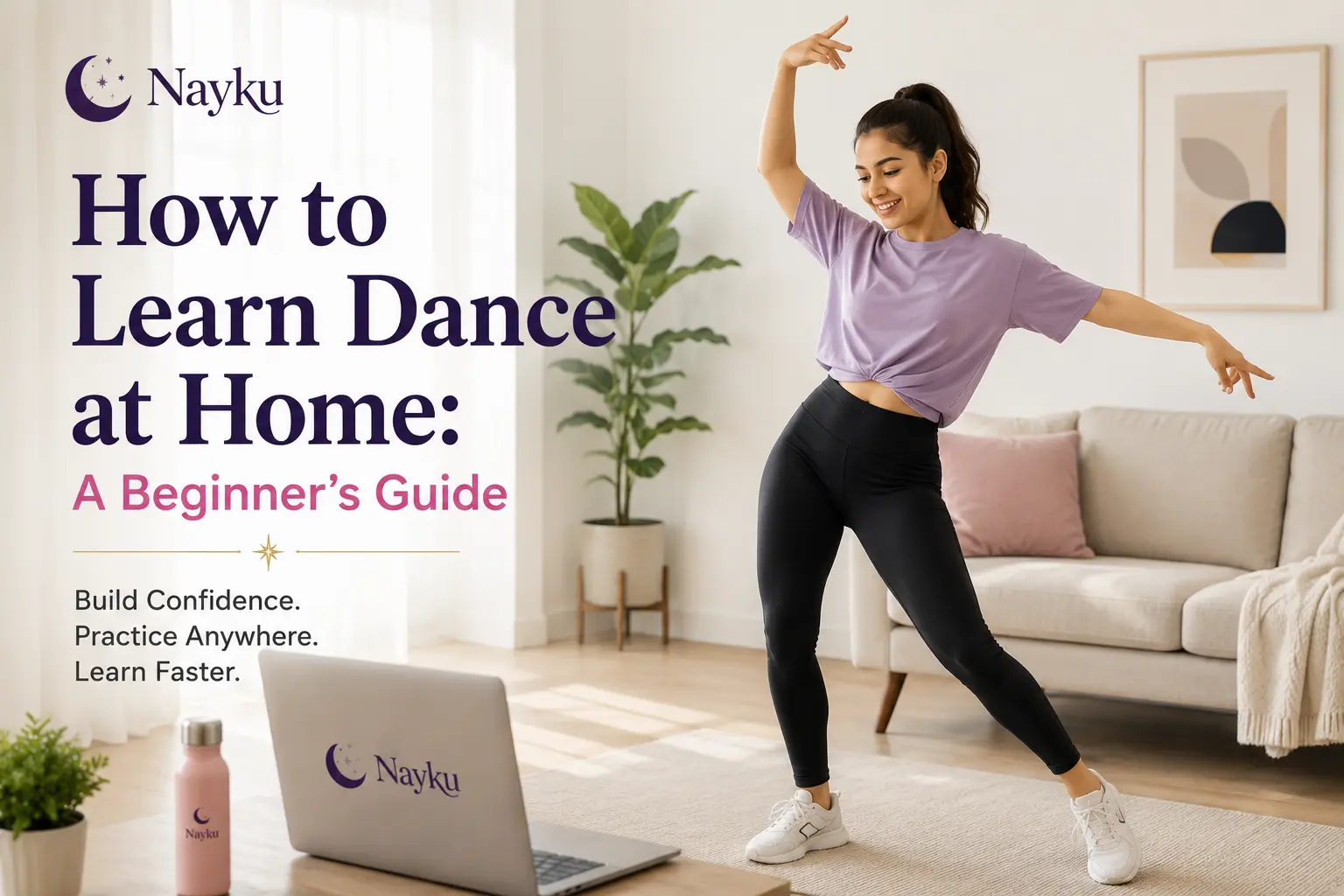
Learn how to dance at home with this beginner-friendly guide. Discover practice routines, warm-up techniques, common mistakes to avoid, and how online dance classes can accelerate your learning.
How to Learn Dance at Home: A Beginner's Guide
Introduction
Learning to dance is something many people dream about, but not everyone feels comfortable stepping into a dance studio on day one. Some worry about having no prior experience, while others struggle to find classes that fit their schedule. Fortunately, the rise of online dance education has made learning dance at home easier than ever before.
Today, anyone with an internet connection, a small practice space, and a willingness to learn can begin developing dance skills from the comfort of home. Whether your goal is to learn Bollywood dance, hip-hop, contemporary, freestyle, or simply improve your confidence on the dance floor, home-based learning can be highly effective when approached correctly.
However, successful dance learning requires more than simply watching choreography videos. Progress comes from consistency, proper technique, structured practice, and a willingness to embrace mistakes as part of the learning process.
This beginner's guide explores how to learn dance at home effectively, create a sustainable practice routine, warm up properly, avoid common beginner mistakes, and use online coaching to accelerate your growth.
Why Learning Dance at Home Has Become So Popular
The traditional model of dance education often requires commuting to a studio, following fixed schedules, and balancing classes around work or school commitments.
Online learning has changed that completely.
Today, students can access expert instruction from anywhere in the world. Whether you live in a large city or a small town, online dance classes make professional guidance accessible without geographic limitations.
Home learning also provides a more comfortable environment for beginners. Many students feel less self-conscious practicing new movements privately before performing in front of others.
Additional advantages include:
- Flexible schedules
- Lower costs
- Self-paced learning
- Access to recorded lessons
- Practice on your own timeline
- Learning from experienced instructors worldwide
For beginners, these benefits create an ideal environment for skill development.
Setting Realistic Expectations
One of the biggest mistakes new dancers make is expecting rapid progress.
Social media often showcases advanced dancers performing polished routines, creating unrealistic expectations for beginners. What viewers rarely see are the years of practice, repetition, and dedication behind those performances.
Learning dance is similar to learning a language or musical instrument. Progress happens gradually through consistent effort.
During your first few weeks, focus on:
- Understanding rhythm
- Learning basic movements
- Improving coordination
- Building confidence
- Developing consistency
Small improvements accumulate over time and eventually lead to significant progress.
Patience is one of the most valuable skills a beginner can develop.
Creating an Effective Dance Practice Routine
A structured routine is essential for steady improvement.
Without a plan, many beginners practice inconsistently, making it difficult to build momentum.
Rather than practicing for several hours once a week, shorter and more frequent sessions typically produce better results.
A beginner-friendly routine might look like:
Warm-Up (10 Minutes)
Prepare the body for movement and reduce injury risk.
Technique Practice (15 Minutes)
Focus on foundational movements and body control.
Choreography Practice (20 Minutes)
Learn and repeat small sections of choreography.
Freestyle or Creative Movement (10 Minutes)
Experiment with self-expression and musical interpretation.
Cool Down (5 Minutes)
Stretch and allow the body to recover.
Practicing three to five times per week often produces noticeable improvement within a few months.
Consistency matters more than intensity.
Creating the Right Practice Space
You do not need a professional studio to learn dance effectively.
A small, safe, and clutter-free area is often sufficient.
Before each practice session:
- Remove obstacles
- Ensure adequate lighting
- Wear comfortable clothing
- Use supportive footwear when appropriate
- Keep water nearby
A mirror can be helpful, but it is not mandatory. While mirrors provide visual feedback, dancers should also develop body awareness without constantly relying on visual confirmation.
The goal is to create an environment that encourages regular practice.
The Importance of Warming Up
Many beginners underestimate the importance of warming up.
Jumping directly into choreography can increase injury risk and reduce performance quality.
A proper warm-up gradually increases blood flow, prepares muscles for movement, and improves flexibility.
Effective warm-up activities include:
Light Cardio
Marching, jogging in place, or jumping jacks help increase heart rate.
Dynamic Stretching
Controlled leg swings, arm circles, and torso rotations prepare joints for movement.
Mobility Exercises
Gentle movements improve range of motion and body control.
Rhythm Exercises
Simple movements performed to music help establish timing and coordination.
A good warm-up improves both safety and performance.
Building Strong Dance Fundamentals
Many beginners focus exclusively on learning choreography.
While choreography is exciting, strong fundamentals accelerate long-term progress.
Important foundational skills include:
Rhythm
Understanding musical timing and beat structure.
Posture
Maintaining proper body alignment.
Balance
Developing stability during movement transitions.
Coordination
Synchronizing different body parts.
Musicality
Interpreting music through movement.
Strong fundamentals make future choreography significantly easier to learn.
Common Beginner Mistakes
Every dancer makes mistakes during the learning process. Recognizing common pitfalls can help you progress more efficiently.
Practicing Inconsistently
Occasional practice produces limited results.
Consistent repetition builds muscle memory and confidence.
Comparing Yourself to Others
Every dancer develops at a different pace.
Focus on personal improvement rather than external comparisons.
Skipping Warm-Ups
Warm-ups improve performance and reduce injury risk.
Learning Too Many Routines at Once
Many beginners attempt to learn multiple choreographies simultaneously.
Mastering fewer routines often produces better results.
Ignoring Technique
Technique may seem less exciting than choreography, but it forms the foundation of strong dancing.
Becoming Discouraged Too Quickly
Progress is rarely linear.
Temporary plateaus are normal and often precede breakthroughs.
How Online Dance Classes Accelerate Learning
While self-practice is valuable, structured instruction often speeds up progress considerably.
Online dance classes provide:
Expert Guidance
Professional instructors help students learn proper technique from the beginning.
Structured Curriculum
Lessons follow a logical progression rather than random tutorials.
Accountability
Scheduled classes encourage consistency.
Feedback
Corrections help prevent bad habits from developing.
Community Support
Many online programs provide opportunities to interact with instructors and fellow students.
This combination of structure and flexibility makes online learning particularly effective for beginners.
The Role of Feedback in Dance Improvement
One challenge of learning independently is identifying mistakes.
Dancers often repeat incorrect movements without realizing it.
Online coaching helps address this issue through:
- Video submissions
- Live virtual classes
- Instructor feedback
- Progress assessments
Receiving corrections early can dramatically accelerate improvement and reduce frustration.
Staying Motivated During the Learning Process
Motivation naturally fluctuates over time.
Rather than relying solely on motivation, successful dancers build habits.
Helpful strategies include:
- Setting small goals
- Tracking progress
- Recording practice sessions
- Celebrating improvements
- Following a consistent schedule
- Learning music you enjoy
The goal is to make practice a regular part of your routine rather than something you do only when inspired.
How Long Does It Take to Learn Dance?
One of the most common questions beginners ask is how long it takes to become a good dancer.
The answer depends on:
- Practice frequency
- Learning style
- Dance genre
- Instruction quality
- Individual goals
Many beginners notice improvements within a few weeks of consistent practice.
After several months, most students experience significant gains in confidence, coordination, and movement quality.
Dance is a lifelong skill, and continuous improvement is part of the journey.
Why Home Learning Works
Learning dance at home offers a unique combination of convenience, flexibility, and accessibility.
Students can practice at their own pace, revisit lessons as needed, and build confidence in a comfortable environment.
When combined with structured online instruction and consistent practice habits, home learning can be just as effective as traditional studio training for many beginners.
Conclusion
Learning dance at home has never been more accessible. With the right mindset, a structured practice routine, proper warm-up habits, and access to quality online instruction, beginners can develop strong dance skills without stepping into a studio.
The key to success lies in consistency rather than perfection. Every practice session contributes to growth, even when progress feels slow. By focusing on fundamentals, avoiding common mistakes, and seeking guidance when needed, you can build confidence, improve technique, and enjoy the rewarding process of learning dance.
Whether your goal is fitness, self-expression, performance, or personal growth, the journey begins with a single step—and your living room can be the perfect place to start.
15 SEO FAQs
1. Can I learn dance at home without any experience?
Yes. Many beginners successfully learn dance at home by following structured lessons, practicing regularly, and focusing on foundational techniques before attempting advanced choreography.
2. What is the best way to learn dance at home?
The most effective approach combines a consistent practice routine, proper warm-ups, technique training, choreography practice, and guidance from online dance classes or instructors.
3. How long does it take to learn dance as a beginner?
Progress varies by individual, but most beginners notice improvements in coordination, rhythm, and confidence within a few weeks of regular practice.
4. Are online dance classes effective for beginners?
Yes. Online dance classes provide professional instruction, structured learning paths, personalized feedback, and flexibility, making them highly effective for beginners.
5. How often should I practice dance at home?
Beginners typically benefit from practicing three to five times per week for 30 to 60 minutes per session.
6. Do I need a large space to learn dance at home?
No. A small, safe, clutter-free area with enough room to move comfortably is usually sufficient for beginner dance practice.
7. Why are warm-ups important before dancing?
Warm-ups prepare the muscles and joints for movement, improve performance, increase flexibility, and reduce the risk of injuries.
8. What should beginners focus on first?
Beginners should focus on rhythm, posture, balance, coordination, musicality, and basic movement patterns before attempting complex choreography.
9. Can I learn Bollywood dance online?
Absolutely. Many online dance platforms offer beginner-friendly Bollywood dance classes that teach choreography, technique, and performance skills.
10. What are the most common mistakes beginner dancers make?
Common mistakes include skipping warm-ups, practicing inconsistently, comparing themselves to others, ignoring technique, and trying to learn too many routines at once.
11. How can I improve faster as a dancer?
Consistent practice, professional feedback, strong fundamentals, goal setting, and structured online coaching can significantly accelerate progress.
12. Is it better to learn dance from YouTube or online coaching?
YouTube can be helpful for practice, but structured online coaching often provides a clearer learning path, expert guidance, and personalized feedback.
13. Can dance help improve fitness?
Yes. Dance improves cardiovascular health, flexibility, balance, endurance, coordination, and overall physical fitness.
14. How do online dance instructors provide feedback?
Many online programs offer live classes, video reviews, progress assessments, and one-on-one coaching sessions to help students improve technique.
15. Is learning dance at home suitable for adults?
Yes. Adults of all ages can successfully learn dance at home, whether their goals are fitness, confidence building, stress relief, or mastering a specific dance style.
Ready to Take the Next Step?
Connect with verified experts across 50+ service categories and get things done — fast.