

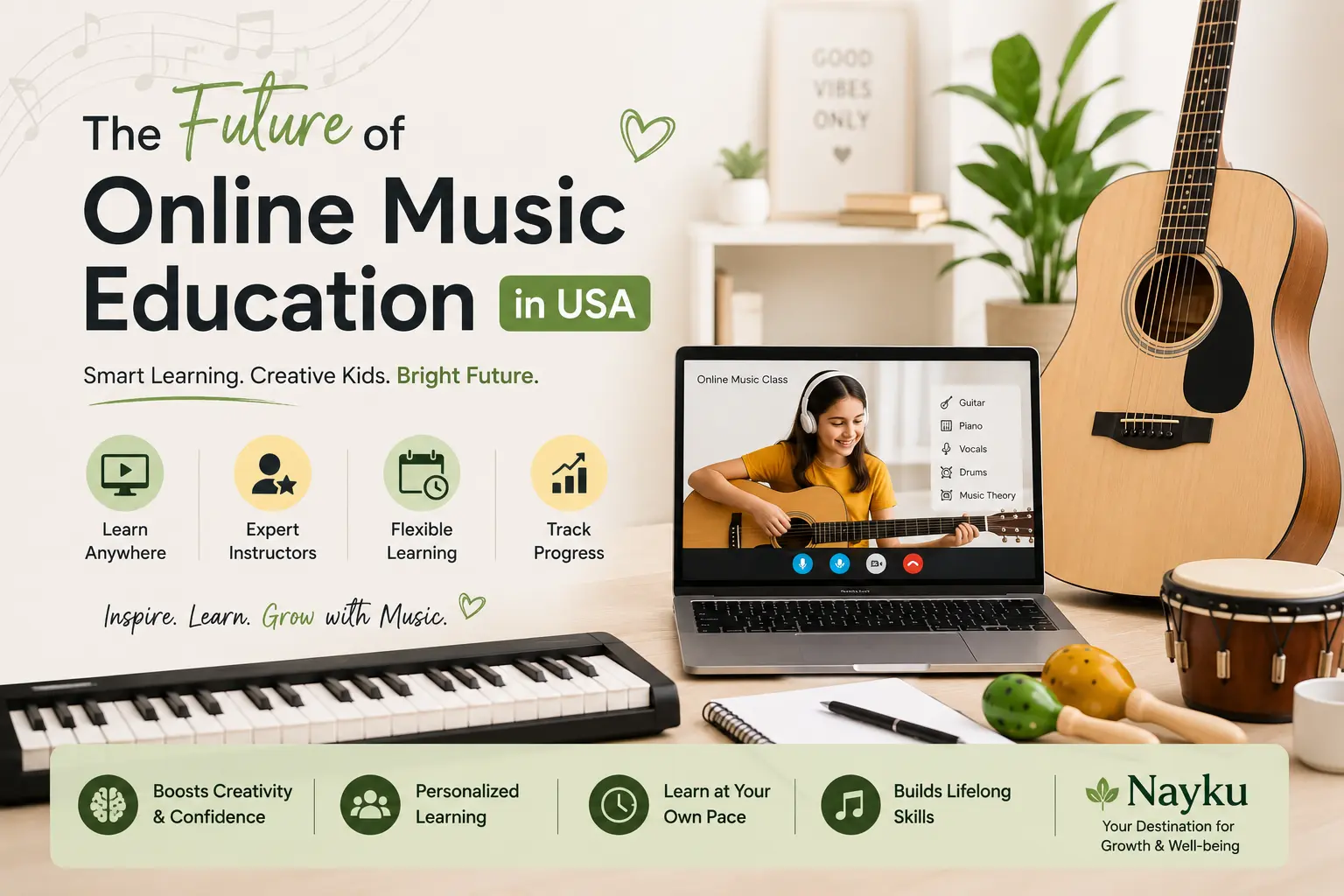
Explore how AI, virtual learning, and technology are transforming the future of online music education in the USA with Nayku.
The Future of Online Music Education in USA
The music education industry in the United States is rapidly evolving through digital technology, online learning platforms, artificial intelligence, and virtual collaboration tools. What once required physical classrooms, private tutors, and expensive music academies can now be accessed from anywhere through smartphones, tablets, and computers.
Today, students across the USA are embracing online music education because it offers flexibility, affordability, and access to global learning opportunities. From online piano lessons and vocal training to AI-powered music production courses, digital learning is transforming how Americans learn and experience music.
As technology continues to reshape education, platforms like Nayku are helping learners explore music, creativity, and self-development through accessible online experiences designed for modern lifestyles.
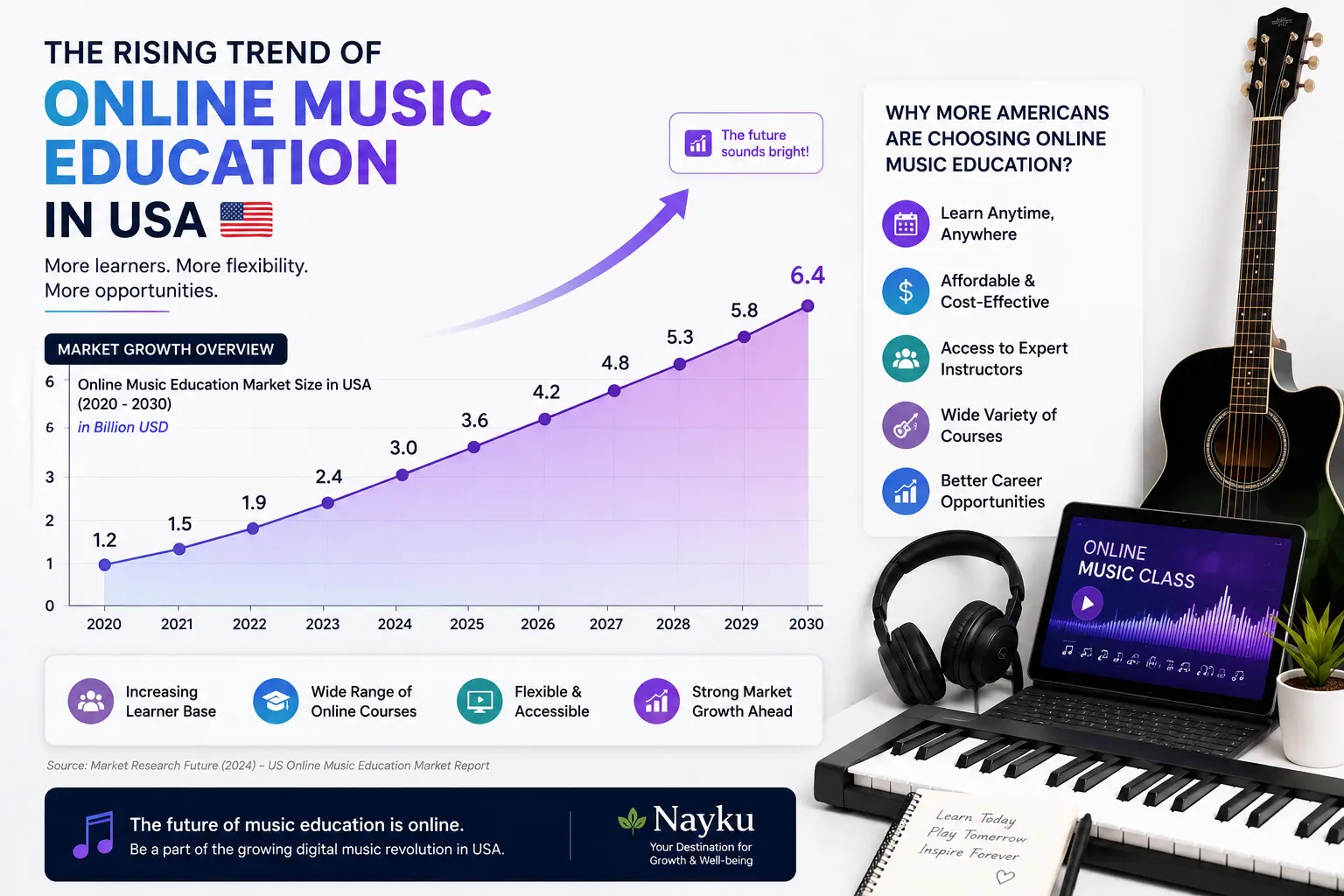
Why Online Music Education Is Growing in the USA
The United States has seen massive growth in online learning over the past few years, and music education is becoming one of the fastest-growing digital learning sectors. Students, working professionals, parents, and aspiring musicians are increasingly choosing online platforms for convenience and personalized learning.
Several factors are driving this growth:
- Flexible learning schedules
- Affordable online courses
- Access to expert instructors worldwide
- AI-powered learning tools
- Growth of creator economy careers
- Rising interest in music production and content creation
Online learning allows students to practice and improve their musical skills at their own pace without the limitations of traditional classroom environments.
Technology Is Transforming Music Education
Technology has become the foundation of modern music learning in America. Digital tools now make music education more interactive, engaging, and personalized than ever before.
AI-Powered Music Learning
Artificial intelligence is changing the way students learn music online. AI tools can:
- Analyze pitch and rhythm
- Track student progress
- Provide instant performance feedback
- Suggest personalized practice routines
- Help with songwriting and composition
These technologies help learners improve faster while making online music education more adaptive and efficient.
Virtual Music Classrooms in the USA
Virtual classrooms are becoming increasingly popular among American students and instructors. Through video conferencing, screen sharing, and collaborative software, students can now:
- Attend live music lessons remotely
- Participate in group workshops
- Collaborate with musicians worldwide
- Receive one-on-one coaching online
This accessibility has opened opportunities for students living in smaller towns and rural areas where traditional music schools may not be easily available.
Online Music Education for Different Age Groups
Music Learning for Kids
Many American parents are enrolling children in online music classes because digital platforms offer:
- Interactive learning games
- Beginner-friendly lessons
- Flexible schedules
- Creative activities
- Personalized learning paths
Music education also helps children improve concentration, creativity, confidence, and discipline.
Music Education for Adults
Adults across the USA are increasingly learning music online as a hobby, career skill, or creative outlet. Online learning allows busy professionals to learn:
- Guitar
- Piano
- Singing
- Music production
- Songwriting
- Audio engineering
without disrupting work or personal schedules.
The Rise of Music Production and Creator Economy Careers
Social media platforms like YouTube, TikTok, Spotify, and Instagram have inspired millions of Americans to explore digital music careers. Online music education now extends beyond traditional instruments into areas such as:
- Music production
- Beat making
- Audio editing
- Podcast sound design
- Digital composition
- Streaming performance
The creator economy is encouraging more students to develop music-related skills that can become freelance or full-time careers.
Benefits of Online Music Education
1. Flexible Learning
Students can learn anytime and from anywhere.
2. Affordable Education
Online classes are often cheaper than traditional private lessons.
3. Wider Course Access
Learners can access specialized music courses globally.
4. Personalized Learning
Digital platforms allow students to learn according to skill level and goals.
5. Self-Paced Practice
Students can replay lessons and practice independently.
Challenges Facing Online Music Education
Although online music education is growing rapidly in the USA, some challenges still exist:
- Internet connectivity issues
- Audio delay during live sessions
- Lack of physical classroom interaction
- Technical setup limitations
- Screen fatigue
However, improvements in AI, virtual learning platforms, and immersive technologies continue reducing these limitations each year.
The Future of Music Education in America
Experts believe the future of online music education in the USA will become even more technology-driven. Emerging trends include:
- AI-powered instructors
- Virtual reality music classrooms
- Gamified learning systems
- Personalized learning algorithms
- Immersive music experiences
- Global virtual collaborations
These innovations are expected to make music education more accessible, engaging, and interactive for future generations.
The Importance of Creativity in the Digital Era
While technology continues transforming education, creativity remains at the heart of music learning. Online platforms can provide tools and guidance, but emotional expression, artistic interpretation, and originality still depend on human creativity and practice.
Music education not only teaches technical skills but also helps learners:
- Build confidence
- Improve discipline
- Express emotions
- Develop creativity
- Enhance focus and memory
How Nayku Supports Digital Learning and Creativity
Nayku supports modern digital learning through educational, music, wellness, and self-development content designed for today’s online learners. By combining creativity, accessibility, and technology, Nayku helps learners explore music education and personal growth in a flexible and engaging way.
Conclusion
The future of online music education in the USA is being shaped by technology, accessibility, creativity, and digital innovation. Online learning platforms are making music education more affordable, flexible, and globally connected than ever before.
As AI, virtual classrooms, and digital collaboration continue evolving, students across America will have even greater opportunities to explore music, creativity, and professional growth online.
Platforms like Nayku continue supporting modern learners through innovative educational experiences designed for the future of digital learning.
20 FAQs About the Future of Online Music Education in USA
1. What is online music education?
Online music education allows students to learn music through digital platforms, virtual classes, and online learning tools.
2. Why is online music education growing in the USA?
It offers flexibility, affordability, and access to expert instructors from anywhere.
3. Can beginners learn music online?
Yes, many online platforms provide beginner-friendly lessons and guided practice.
4. What instruments can be learned online?
Students can learn guitar, piano, violin, drums, vocals, and many other instruments online.
5. How does AI help online music learning?
AI provides instant feedback, tracks progress, and personalizes practice routines.
6. Are online music lessons affordable?
Yes, online music classes are often more affordable than traditional private lessons.
7. Can children learn music online?
Yes, many platforms offer interactive and beginner-friendly music programs for children.
8. What are virtual music classrooms?
Virtual classrooms allow students to attend live music lessons remotely through video platforms.
9. Is online music education effective?
Yes, consistent practice and digital learning tools can help students improve effectively.
10. What skills can students learn online?
Students can learn singing, instruments, music production, songwriting, audio editing, and music theory.
11. Can adults learn music online?
Yes, online music education is popular among adults learning music as a hobby or career skill.
12. What is gamified music learning?
Gamified learning uses rewards, challenges, and progress systems to make learning engaging.
13. How does technology improve music education?
Technology increases accessibility, personalization, collaboration, and interactive learning experiences.
14. Can students build music careers online?
Yes, online platforms support careers in music production, content creation, streaming, and performance.
15. What are the challenges of online music education?
Internet issues, audio delays, and lack of physical interaction can affect online learning.
16. What role does VR play in music education?
Virtual reality may create immersive digital music classrooms and virtual performances.
17. Is online music education suitable for busy schedules?
Yes, online learning allows students to study at their own pace and schedule.
18. Why is music education important?
Music education improves creativity, confidence, discipline, memory, and emotional expression.
19. What content does Nayku provide?
Nayku offers music, wellness, educational, and self-development content.
20. What is the future of online music education in the USA?
The future includes AI-powered learning, immersive virtual classrooms, personalized education, and global collaboration.
Ready to Take the Next Step?
Connect with verified experts across 50+ service categories and get things done — fast.